So happy and blessed to have another year with Nonna!
The kids recorded this audio birthday 'card' for her... then we just kept recording their silliness.

2.21.2014


2.18.2014
There She Goes...
The ladies have continued knitting and two of the scarves they've given me were made on the smaller side for youth. Who better to model them than my Ellie girl.
I got such a kick scrolling through some of the photos we captured for the scarf site, that I just had to share my favorites... and talk about how she's growing up so fast.

Since Christmas her new front teeth have really come in and change her look so much. She is growing up in other ways too -- asking to do jobs around the house to earn money for a second bird (though if her first bird keeps squawking as much as he has, she made get a cash infusion from mom and dad for his companion to come sooner and quiet him down!).

She's especially been putting not-so-subtle pressure on her parents to adopt her another sibling (or 8)! In fact, she is pointing out her growing independence as a sign that we would have more time on our hands to take on new babies.

Recently Ellie has begun to indicate a growing frustration over her inability to communicate with her Albanian friends. In so many words she has wondered why Albanian is so much harder for her to learn than she remembers 'learning' English. As a result she has begun asking why she can't see her American friends and wishing she had more kids in her school. If you think of Ellie, could you pray for her in that area?

Going back to the 'adoption' talk, she's already come up with names for her new siblings. Currently her favorites are are Russell and Jillian.
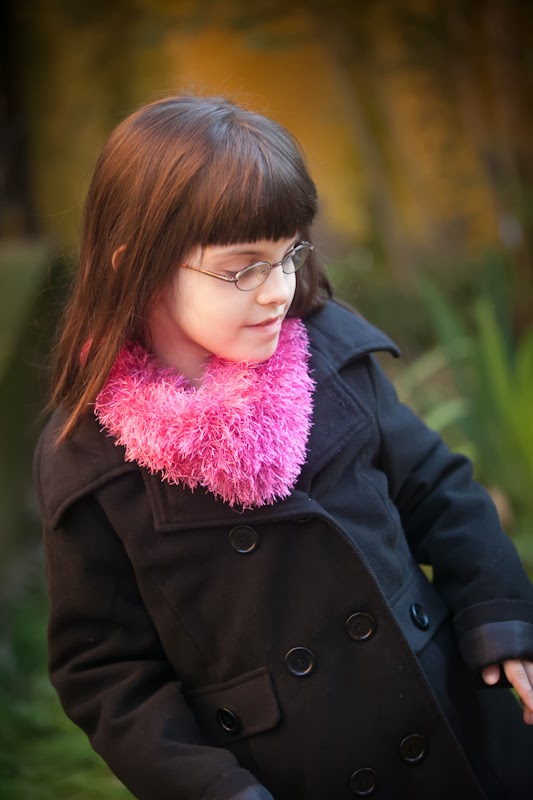
I love it that Ellie has such a tender heart for kids. In particular she expresses concern for the gypsy children begging in the streets. We've started carrying cracker packets in our vehicle so we have something to give them if they approach us.


Oh Ellie girl. You exude joy. You bring joy. We love you so much!


2.17.2014
A Visit from Reni's First Valentine
On a weekend devoted to remembering those we love most, it was apropos to receive a woman very dear to our hearts into our home.

She loved our boy when he was only a few weeks old.
She served as his godmother at his baptism when he was under the care of the Sisters of Charity and gave him the name, David, after reading the account of David dancing before the Lord. In faith she believed that this little boy with no feet would one day dance too.
On his first birthday she showered him generously with gifts and graciously stepped back from spending time and working within eyesight of her favorite little boy in the green and white orphanage so he could start bonding and attaching with us, his new family.

When we learned that we would be moving to Albania, I dreamed of including her in our family's special days ... and other ordinary days in between.
At great personal sacrifice (and after finishing up the night shift with 25 little ones) she made the trip to Tirana from Elbasan on Sunday morning. We worshiped together at church, then she came to our home for lunch.

She watched Reni build his legos and got a tour of his bedroom.
We went for a walk in the park and enjoyed a beautiful afternoon and talked about visiting again, and meeting her family.
It's difficult to put into words what she means to us, for the gift she gave us in loving our Reni before we even knew of him, selflessly giving away a piece of her heart to him, knowing it would be broken the day he left with his permanent family. Her generosity and courage humble me.
All I know is that we are so blessed to be able to continue a relationship with this special woman. I think she found joy in seeing how well he is doing and I hope it gives her courage to continue loving those who God puts in her care.
*P.S. Special thanks to Kerri Nixon for helping arrange this visit. We literally couldn't have done it without her!
2.16.2014
The Accident
No matter where one travels in the world, he or she inevitably brings home stories of crazy drivers. I knew Albanian drivers weren't the best in the world, but sitting in the back and being driven by some good drivers while over here before, I think was pretty oblivious to the challenges our 'chauffeurs' faced most days.
Once we were blessed to get a vehicle of our own and I sat in the front seat I have had whole new appreciation. When we asked for prayer protection on the roads, it was with the realization that we would be driving on roads in poor conditions, with inexperienced drivers (I'm not yet 40 and I've been driving longer than it's been legal to own a private car), and dodging all sorts of surprises in the highway from uncovered manholes to livestock and children wandering into our path. I sit in the front as an extra set of eyes because you really have no idea from what direction something will be coming at you.
We've literally dodged being passed on the sidewalk, encountered vehicles driving UP the off ramp, cars driving without headlights (in the dark), a family of four riding a motorcyle in the dark with no lights nor reflectors, bicycles in 6 lanes of high speed traffic, unattended livestock wandering onto the road, people running and vaulting over the cement barriers to cross the autostrada in the rain, and vehicles turning left... from the far right lane.
On Friday we were on our way to homeschool co-op. One afternoon per week for a few hours Ellie and Reni can participate in a group of about 20 children up to age 10 with organized games, crafts, singing and Bible story time. It was a drizzly afternoon and we were a mere 200 meters from the school which hosts our group each Friday. The school is situated on a narrow side road that requires an extremely sharp left hand turn. Nathan always signals our turn then drifts a little right to make the hard turn left (more than once we've not turned sharp enough and had to do the turn, reverse, and turn some more).
We had almost turned all the way on to the side road when we heard and felt a loud crunch of metal on metal and the tinkling of glass. A young man in a Mercedes immediately jumped out of his vehicle shouting at us. I was a bit stunned, trying to figure out what in the world had just happened.

What appears to have happened -- since his car was in the passing lane when we got out of our vehicles (in the photo above he had already moved it out of the way) -- was that he was following behind us and because he was in a hurry, he decided to pass us. I can't figure out how he didn't see us, short of being distracted. There were no skid marks on the road and he his us quite hard, accelerating, not braking. Had he stayed in his driving lane, he would not have hit us. The only way he could have hit us was if he was passing in the left lane. (The front, right corner of his Benz was quite damaged, more severely than our VW).

We are so fortunate that he did not hit our tires. Our vehicle was still driveable and we didn't have any broken tail lights. The kids were buckled in, but Ellie said she hit her head on the side of Reni's car seat.
He was yelling at us, "What were you doing?" We pointed at our still-blinking turn signal that we were making a left-hand turn and returned his question back at him since it was the rear of our car and the front of his which was battered.
We called Mandi immediately and as I had him on the phone, he heard Nathan say over and over to the other driver "You hit ME! You hit ME!" (You have to hold your own verbally in situations like this). Unfortunately, Mandi overheard and thought we were being BEATEN! (oops!) and he immediately called several friends, trying to find us.
I don't know what we would have done without our friends Mandi and Arjan. There have been public transportation issues going on all last week and Friday a big strike was planned. All of the street police were occupied with enforcing some new bans on private van taxis and no police were available to come and make a report (so we could file an insurance claim). Arjan knew a chief of police in another community who knew someone in the jurisdiction where we found ourselves and an hour and a half later, he got an officer on the scene.
Once Mandi arrived, I decided to go down to the school and check on the kids (who had already been taken to co-op by another family that arrived shortly after our incident). A male crowd had been gathering, mostly family of the guy who hit us, since he lived just down the road. They were pressuring us to just take money and not involve the police or insurance. We were grateful for someone who could speak Albanian on our behalf, even if we were still outnumbered about 5 to 1.
Nathan told me the officer laid into the other driver as soon as the officer arrived and assessed the situation. Nathan was feeling quite relieved and called me to say the officer was ticketing the other driver and that he (Nathan) was driving into Tirana to make copies of the police report and sign a statement of his account of the situation.
Upon reaching the station, the superior officer pulled out the official red "rules of the road" book and told Nathan that he was at fault. The rules place responsibility for accidents resulting from left-hand turns on the driver making the left-hand turn, even if the collision is from behind. Nathan was told that the other driver was within his rights to attempt to pass us (in spite of admitting that we did have our turn signal on) because the road had a dashed line. Nathan will return to the station on Monday at 1:30 and likely be ticketed for 'causing the accident'.
And if that makes no sense, we learned that you only have to have your turn signal on for a minimum of 10 meters (or about 30 feet)!
I think I knew a fender bender would be inevitable, I just didn't anticipate it to be so soon. In spite of the damage, we are quite thankful that we had friends to help, that the children could go on and do something normal and not have to sit and wait through the whole ordeal, intensifying the trauma for them. We are also grateful that our vehicle was still driveable so we could go on with our plans to go to the village later that afternoon. To those of you who pray for us, thank you! We saw God's hand of protection on us!
2.14.2014

2.11.2014
Ladies' Man
After Bible Study the kids are popular with the youth...

But sometimes it's a little overwhelming...
 |
| It almost looks like Reni's giving a 'thumb's up' -- "Hey! Look at me! Hanging out with the cool kids!" |
But sometimes it's a little overwhelming...
 |
| Um, what is happening? |
 |
| Definitely not cool! |
2.06.2014
Albanian 101
Tonight he did it. He screwed up his courage and he did it. Nathan ordered pizza over the telephone. And not in English. At MTI they challenged us to simple, yet terrifying tasks such as this. I'm a tad embarrassed we didn't try this sooner. But tonight we were hungry (no new groceries 'til tomorrow) and didn't want to delay our supper any longer than necessary.
So how did he do? We'll share the results at the end...

Probably one of the most common questions we got on the road last year was this: what language do they speak in Albania?
Don't worry. It didn't annoy us. We love talking about Albania and this question only served as a great conversation starter.
The answer to that question is Shqip (or, Albanian).
One of our readers (okay, my sister) asked if I might share a little of what we're learning in Albanian class. I was actually relieved to get her request because I've really been wanting to share here. It's been so challenging, and hard, and frustrating, but also rewarding. We love class, we love learning, and we love that we get to implement what we learn right away. Here's how we're doing it...
Regimine
We've been in class since early October and have supplemented our classroom learning with three additional lessons per week with our language helper, Vera, using the language acquisition exercises (LAPs) we learned at MTI. The two different approaches, in addition to individual study, have complemented each other well, but I don't know that one ever feels like he is doing 'enough'. In addition to morning study sessions five days per week, Nathan has been reviewing some basic Albanian through Pimsleur exercises while folding laundry or washing dishes and we like to try to catch the news via Top Chanel live streaming on the computer (we still haven't gotten around to getting a TV yet!).
Style of Learning
Our instructors at MTI shared that new language acquisition comes much like we all acquired our first language, in a very specific order: months and months of listening (comprehension) before eventually speaking, followed by reading those words we have heard for so long, and finally, writing. Too much emphasis on speaking at the beginning of the acquisition process (part of the traditional classroom approach) only triggers fear and frustration on the part of the learner, which close the "learning gates" of our mind because the learner is usually forced to speak before he is ready.
This sequence of listening/speaking/reading/writing is utilized in our LAPs where we hear basic vocabulary and statements by Vera long before we ever begin mimicking her words and phrases and it's not until near the end of the exercise that we even see these new words written down (our connection to Albanian words is to first be audible and contextual for the new words to come into our heads more naturally and 'just sound right'). The idea is that the learner avoids the process of 'translation' (an extra step in the brain to slow us down) but rather unconsciously thinks 'another way to say that is...'. So when we make vocab flashcards, when at all possible, we use pictures and Albanian words, avoiding English altogether if possible. E.g. a photo of Toto on one side, the reverse reads "qen" (dog).
Of course I mentioned that we are taking a class which uses a more traditional, academic approach. After my dad visited last month, he pointed out that we are learning with some pretty bright minds. For over half of our class, this is at least their 3rd or 4th language to learn. They find themselves in Albania because they bring skill sets not easily found in this country... so you get the idea. They are already top drawer for the nations they come from. In other words, to keep up with our classmates, we have to be diligent! Thankfully we have a very patient and understanding teacher whose approach 'keeps our learning gates open.'
Background
It surprises many to learn that Albanian -- while rooted in the ancient Illyrian language -- has only had a standardized alphabet since 1908. It has a number of words borrowed from other languages, but according to the experts, it sits on its own branch apart from all other European languages. Albanian speakers can be found in neighboring countries like Greece, Macedonia, Kosovo, and Montenegro.
The Alphabet
Thankfully Albanian uses a Latin alphabet with only two characters we don't have in English (e pica - ë, and what we casually call a 'c-tail' (sounds like 'ch' and looks like ç). Each letter of the alphabet has 1 unique sound (nothing of this c as in cat or c as in Cecilia or receive). this makes reading Albanian pretty straight forward once you know the phonics and have mastered the dozen or so sounds that we don't have in English. A lot of them require that we exercise those lazy American lips of ours -- yes, we were told Americans are known world wide in linguistic circles as having "lazy lips!". Confused? Watch a YouTube of an African saying Coca Cola and watch yourself in the mirror say the same word... go ahead. We'll still be here.
The alphabet also contains a number of digraphs (two consonants together that make a unique sound) which represent their own character in the alphabet, like gj (like if you were to mash together the words jello and yellow), nj (as in njoh that sounds like no + yo and means to know), dh (sounds like th as in this or that, not 'th' as in thistle), xh (sounds like j as in Jenny), sh, zh, etc.
Digraphs were initially confusing for us is when it came to alphabetizing or looking up words in the dictionary. For example, the word sofra comes BEFORE the word shtepi in the dictionary because sofra starts with 's' that comes before 'sh', the first character in 'shtepi'. All words starting with sh (of which there are many) are in their own section of the dictionary.
So those are some alphabet characters Albanian has which we don't have in English. One character they notably don't have is "W" -- something we obviously noticed early on! It took me a second to realize (when talking about nations and capitals) that Uashington was actually Washington DC.
Grammar Intro
I won't get into the nitty gritty of this but Albanian has some notable differences from English.
The first is the way they distinguish 'definite' from 'indefinite'.
For example, it's one thing to say, "Give me an apple" vs. "Give me the apple". The first is indefinite, the latter is definite.
Albanian doesn't use articles, they just change the ending of the word to distinguish between definite and indefinite.
And to know how to change the ending of the noun, one must first know its gender (something else we don't have in English). And there really is no standard rhyme or reason why a noun is a particular gender. Like the word for 'dress' is fustan, which is masculline! ;-) When all else fails, assume it's masculline, we've been told! But gender is important because Albanian doesn't have the pronoun "it", so you refer to every object by its appropriate gender pronoun, he or she, even if it is inanimate.
For example: I wore a coat today. Can you go get him for me?
Albanian also has cases. If you have studied other languages, you might be familiar with this concept. Albanian has SIX. One of the more 'unusual' cases is called Admirative. It's a change in the verb form to show surprise. I won't go into cases because we haven't really done more than scratch the surface in class yet.
Verbs
Oh don't get us started on verbs.
Did you know there are 164 variations of the Albanian word that means "to come"?
There is generally a stem word for each verb and the ending changes depending on if the subject, tense, and case. Though it's not always the ending of the word that changes, but the entire word itself. But because it's assumed that you know all the verbs and their various forms, the subject pronoun is frequently dropped altogether from the sentence with the expectation that the listener can infer the subject from the form of verb used.
I could write the sentence, "I am American" as Unë jam Amerikanë. But Albanians would think that's an unnecessary waste of breath or ink and say/write the sentence as "Jam Amerikanë."
But to write the sentence, "He is American." I could write "Ai është Amerikan" or more concisely (remember, no wasting!), "Është Amerikan." And I know that the sentence translates "he" and not "she" (though they both use the same verb for 'is', "është") because of the masculine ending of "Amerikan." To say "She is American." I would have written, "Është Amerikanë." And lest you say, "Oh! That's easy. The feminine has an extra vowel at the end!" Except... when it's spoken, that vowel is SILENT! So you can't 'hear' the difference unless you understand and remember the subtle nuance of syllabic emphasis (which to my ears, are super subtle) to distinguish the two!
There are three general categories of verbs which follow their own set of patterns for word endings, but for the most part, the conjugations just have to be memorized!
Below are all the ways to say "come" in all the tenses and cases.

So how did Nathan's pizza order get interpreted?
When Nathan called Tito's he asked for two pizzas. One with ham and onion, the other plain cheese.
When Nathan arrived at Tito's, the baker was apologetic that our order wasn't finished since he could only bake two pizzas at one time in his small oven. Nathan was confused for a moment before it dawned on him that that the pizza guy mistakenly thought we wanted TWO ham and onion pizzas and one cheese.
He kept telling Nathan, I could have delivered so you didn't have to wait!
Giving directions to our apartment? It's confusing enough in ENGLISH! Giving directions in ALBANIAN??? That will be our next challenge. And you'll know we mastered it when you see a photo here of Nathan with his arm around Tito on our apartment landing, but not tonight! Sonte ne do të hamë! Tonight we will eat!
So how did he do? We'll share the results at the end...
Probably one of the most common questions we got on the road last year was this: what language do they speak in Albania?
Don't worry. It didn't annoy us. We love talking about Albania and this question only served as a great conversation starter.
The answer to that question is Shqip (or, Albanian).
One of our readers (okay, my sister) asked if I might share a little of what we're learning in Albanian class. I was actually relieved to get her request because I've really been wanting to share here. It's been so challenging, and hard, and frustrating, but also rewarding. We love class, we love learning, and we love that we get to implement what we learn right away. Here's how we're doing it...
Regimine
We've been in class since early October and have supplemented our classroom learning with three additional lessons per week with our language helper, Vera, using the language acquisition exercises (LAPs) we learned at MTI. The two different approaches, in addition to individual study, have complemented each other well, but I don't know that one ever feels like he is doing 'enough'. In addition to morning study sessions five days per week, Nathan has been reviewing some basic Albanian through Pimsleur exercises while folding laundry or washing dishes and we like to try to catch the news via Top Chanel live streaming on the computer (we still haven't gotten around to getting a TV yet!).
Style of Learning
Our instructors at MTI shared that new language acquisition comes much like we all acquired our first language, in a very specific order: months and months of listening (comprehension) before eventually speaking, followed by reading those words we have heard for so long, and finally, writing. Too much emphasis on speaking at the beginning of the acquisition process (part of the traditional classroom approach) only triggers fear and frustration on the part of the learner, which close the "learning gates" of our mind because the learner is usually forced to speak before he is ready.
This sequence of listening/speaking/reading/writing is utilized in our LAPs where we hear basic vocabulary and statements by Vera long before we ever begin mimicking her words and phrases and it's not until near the end of the exercise that we even see these new words written down (our connection to Albanian words is to first be audible and contextual for the new words to come into our heads more naturally and 'just sound right'). The idea is that the learner avoids the process of 'translation' (an extra step in the brain to slow us down) but rather unconsciously thinks 'another way to say that is...'. So when we make vocab flashcards, when at all possible, we use pictures and Albanian words, avoiding English altogether if possible. E.g. a photo of Toto on one side, the reverse reads "qen" (dog).
Of course I mentioned that we are taking a class which uses a more traditional, academic approach. After my dad visited last month, he pointed out that we are learning with some pretty bright minds. For over half of our class, this is at least their 3rd or 4th language to learn. They find themselves in Albania because they bring skill sets not easily found in this country... so you get the idea. They are already top drawer for the nations they come from. In other words, to keep up with our classmates, we have to be diligent! Thankfully we have a very patient and understanding teacher whose approach 'keeps our learning gates open.'
Background
It surprises many to learn that Albanian -- while rooted in the ancient Illyrian language -- has only had a standardized alphabet since 1908. It has a number of words borrowed from other languages, but according to the experts, it sits on its own branch apart from all other European languages. Albanian speakers can be found in neighboring countries like Greece, Macedonia, Kosovo, and Montenegro.
The Alphabet
Thankfully Albanian uses a Latin alphabet with only two characters we don't have in English (e pica - ë, and what we casually call a 'c-tail' (sounds like 'ch' and looks like ç). Each letter of the alphabet has 1 unique sound (nothing of this c as in cat or c as in Cecilia or receive). this makes reading Albanian pretty straight forward once you know the phonics and have mastered the dozen or so sounds that we don't have in English. A lot of them require that we exercise those lazy American lips of ours -- yes, we were told Americans are known world wide in linguistic circles as having "lazy lips!". Confused? Watch a YouTube of an African saying Coca Cola and watch yourself in the mirror say the same word... go ahead. We'll still be here.
The alphabet also contains a number of digraphs (two consonants together that make a unique sound) which represent their own character in the alphabet, like gj (like if you were to mash together the words jello and yellow), nj (as in njoh that sounds like no + yo and means to know), dh (sounds like th as in this or that, not 'th' as in thistle), xh (sounds like j as in Jenny), sh, zh, etc.
Digraphs were initially confusing for us is when it came to alphabetizing or looking up words in the dictionary. For example, the word sofra comes BEFORE the word shtepi in the dictionary because sofra starts with 's' that comes before 'sh', the first character in 'shtepi'. All words starting with sh (of which there are many) are in their own section of the dictionary.
So those are some alphabet characters Albanian has which we don't have in English. One character they notably don't have is "W" -- something we obviously noticed early on! It took me a second to realize (when talking about nations and capitals) that Uashington was actually Washington DC.
Grammar Intro
I won't get into the nitty gritty of this but Albanian has some notable differences from English.
The first is the way they distinguish 'definite' from 'indefinite'.
For example, it's one thing to say, "Give me an apple" vs. "Give me the apple". The first is indefinite, the latter is definite.
Albanian doesn't use articles, they just change the ending of the word to distinguish between definite and indefinite.
And to know how to change the ending of the noun, one must first know its gender (something else we don't have in English). And there really is no standard rhyme or reason why a noun is a particular gender. Like the word for 'dress' is fustan, which is masculline! ;-) When all else fails, assume it's masculline, we've been told! But gender is important because Albanian doesn't have the pronoun "it", so you refer to every object by its appropriate gender pronoun, he or she, even if it is inanimate.
For example: I wore a coat today. Can you go get him for me?
Albanian also has cases. If you have studied other languages, you might be familiar with this concept. Albanian has SIX. One of the more 'unusual' cases is called Admirative. It's a change in the verb form to show surprise. I won't go into cases because we haven't really done more than scratch the surface in class yet.
 |
| Nathan and I bought this as a Christmas gift to ourselves. |
Verbs
Oh don't get us started on verbs.
Did you know there are 164 variations of the Albanian word that means "to come"?
There is generally a stem word for each verb and the ending changes depending on if the subject, tense, and case. Though it's not always the ending of the word that changes, but the entire word itself. But because it's assumed that you know all the verbs and their various forms, the subject pronoun is frequently dropped altogether from the sentence with the expectation that the listener can infer the subject from the form of verb used.
I could write the sentence, "I am American" as Unë jam Amerikanë. But Albanians would think that's an unnecessary waste of breath or ink and say/write the sentence as "Jam Amerikanë."
But to write the sentence, "He is American." I could write "Ai është Amerikan" or more concisely (remember, no wasting!), "Është Amerikan." And I know that the sentence translates "he" and not "she" (though they both use the same verb for 'is', "është") because of the masculine ending of "Amerikan." To say "She is American." I would have written, "Është Amerikanë." And lest you say, "Oh! That's easy. The feminine has an extra vowel at the end!" Except... when it's spoken, that vowel is SILENT! So you can't 'hear' the difference unless you understand and remember the subtle nuance of syllabic emphasis (which to my ears, are super subtle) to distinguish the two!
There are three general categories of verbs which follow their own set of patterns for word endings, but for the most part, the conjugations just have to be memorized!
Below are all the ways to say "come" in all the tenses and cases.
So how did Nathan's pizza order get interpreted?
When Nathan called Tito's he asked for two pizzas. One with ham and onion, the other plain cheese.
When Nathan arrived at Tito's, the baker was apologetic that our order wasn't finished since he could only bake two pizzas at one time in his small oven. Nathan was confused for a moment before it dawned on him that that the pizza guy mistakenly thought we wanted TWO ham and onion pizzas and one cheese.
He kept telling Nathan, I could have delivered so you didn't have to wait!
Giving directions to our apartment? It's confusing enough in ENGLISH! Giving directions in ALBANIAN??? That will be our next challenge. And you'll know we mastered it when you see a photo here of Nathan with his arm around Tito on our apartment landing, but not tonight! Sonte ne do të hamë! Tonight we will eat!
2.05.2014
Ellie and her friend

It does my heart good that Ellie has made an English-speaking friend her age here (yes, in spite of appearances they are just one month apart). I just wish there wasn't a mountain between us! Trusting and praying for more opportunities for their budding relationship to grow and flourish.
Subscribe to:
Posts (Atom)